Exam guide
MRCP(UK): the exam, its three parts and how it fits into training
MRCP(UK) is the postgraduate diploma for physicians in the UK. It has three parts: Part 1, Part 2 Written and PACES, the clinical exam. The full diploma is required to enter most physician specialty training.
What MRCP(UK) is
MRCP(UK) stands for Membership of the Royal Colleges of Physicians of the United Kingdom. The exam is set by the Federation of the Royal Colleges of Physicians of the UK on behalf of three colleges: the Royal College of Physicians of London, the Royal College of Physicians of Edinburgh and the Royal College of Physicians and Surgeons of Glasgow.
It tests the knowledge, clinical skills and judgement expected of a doctor entering higher training in medicine, set against the UK Internal Medicine curriculum. The diploma is awarded once all three parts are passed. It is taken in the UK and at international centres.
Where it sits in training
In the UK, doctors usually start MRCP(UK) during the Foundation Programme or early in Internal Medicine Training (IMT), the stage that follows it:
- Foundation Programme (FY1–FY2). Doctors can sit Part 1 after 12 months of postgraduate experience in medical employment.
- Internal Medicine Training (IMT, stage 1). Trainees work towards the full diploma. JRCPTB's progression guidance expects Part 1 early in IMT and the full diploma before IMT ends.
- Specialty training (ST4 onwards). JRCPTB requires trainees to complete IMT and hold the full MRCP(UK) Diploma to enter specialty training at ST4. Some specialties recruit earlier, at ST3, after two years of IMT with the diploma.
Doctors trained outside the UK also take MRCP(UK) as a route into UK practice and training, and as a physician qualification in its own right.
Registration and eligibility
- Apply online through a My MRCP(UK) account on the Federation's website: check your details, choose a centre, request any special arrangements and pay.
- Diets and windows. Each part runs in several sittings ("diets") a year, each with a fixed application period. The PACES application window is open for one week, and UK centres do not accept late applications. See the Federation's PACES application dates and instructions.
- Part 1 is open to doctors with at least 12 months' postgraduate experience in medical employment.
- Part 2 Written and PACES follow a pass in Part 1, in either order. The Federation advises at least two years' clinical hospital experience before PACES.
- Attempts. A maximum of six attempts at any part of the examination.
Check the Federation's pages before you apply: dates, fees and rules change from one diet to the next.
MRCP(UK) Part 1
Part 1 tests knowledge of common and important disorders and the clinical science behind them.
- Papers
- Two, three hours each
- Questions
- 100 per paper, 200 in total
- Format
- Best of five: one correct answer and four plausible alternatives; no negative marking
- Delivery
- Computer-based, at a test centre or online
The blueprint spreads the 200 questions across the curriculum. Indicative numbers from the Federation:
| Topic | Questions |
|---|---|
| Clinical sciences | 25 |
| Clinical pharmacology and therapeutics | 15 |
| Cardiology, endocrinology, gastroenterology, infectious diseases, neurology, renal, respiratory, rheumatology | 14 each |
| Haematology | 10 |
| Psychiatry | 9 |
| Dermatology, geriatric medicine | 8 each |
| Oncology | 5 |
| Medical ophthalmology, palliative medicine | 4 each |
MRCP(UK) Part 2 Written
Part 2 Written tests clinical judgement in diagnosis, investigation, management and prognosis. Questions usually open with a clinical scenario and may include investigation results.
- Papers
- Two, three hours each
- Questions
- 100 per paper, 200 in total
- Format
- Best of five; no negative marking
- Images
- Clinical photographs, pathology slides, inheritance trees, ECGs, X-rays, CT and MR scans, echocardiograms
Indicative numbers in the current blueprint (to the 2027.2 diet; a revised blueprint applies from 2027.3):
| Specialty | Questions |
|---|---|
| Cardiology, endocrinology, gastroenterology, infectious diseases, renal, respiratory | 19 each |
| Clinical pharmacology and therapeutics | 18 |
| Neurology | 17 |
| Dermatology, geriatric medicine, haematology, rheumatology | 9 each |
| Oncology | 6 |
| Medical ophthalmology, palliative medicine, psychiatry | 3 each |
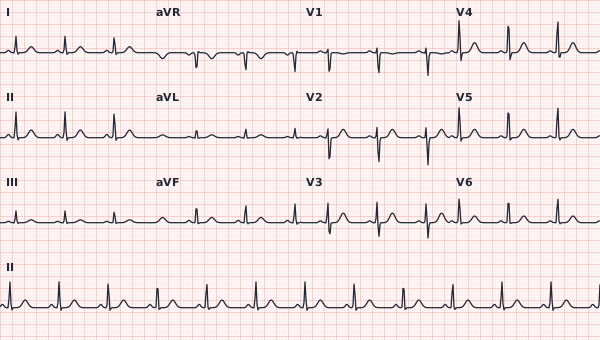
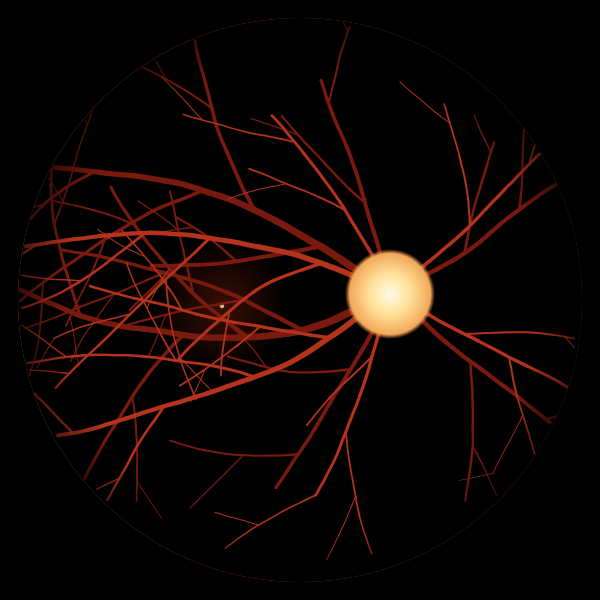
Many questions include an image, such as a rhythm strip, a fundus or a rash.
PACES: the clinical exam
PACES (Practical Assessment of Clinical Examination Skills) is taken with real or surrogate patients. Its current format has run since the third diet of 2023.
- Stations
- Five, 20 minutes each, 5 minutes between them
- Encounters
- Eight in total, 125 minutes
- Examiners
- Two independent examiners at every station
| Station | Encounters |
|---|---|
| 1 | Communication (10 min) · Respiratory examination (10 min) |
| 2 | Consultation (20 min) |
| 3 | Cardiovascular examination (10 min) · Nervous system examination (10 min) |
| 4 | Communication (10 min) · Abdominal examination (10 min) |
| 5 | Consultation (20 min) |
Each physical examination allows up to 6 minutes of examination and at least 4 minutes of questions. A consultation gives 15 minutes for history, examination and discussion with the patient, then 5 minutes with the examiner. One consultation is usually acute, the other less so. Consultations often involve skin, rheumatological, endocrine and eye problems.
Examiners mark seven skills, each Satisfactory, Borderline or Unsatisfactory: physical examination, identifying physical signs, clinical communication, differential diagnosis, clinical judgement, managing patients' concerns and maintaining patient welfare.
Clinical material for MRCP preparation
We provide whole 12-lead ECGs, chest films, fundi and murmurs to interpret. JustDiagnose complements the knowledge you build with question banks and courses, and can support MRCP preparation.
- Real material. ECGs, X-rays, CT and MRI, heart and lung sound recordings, fundus photographs and clinical signs.
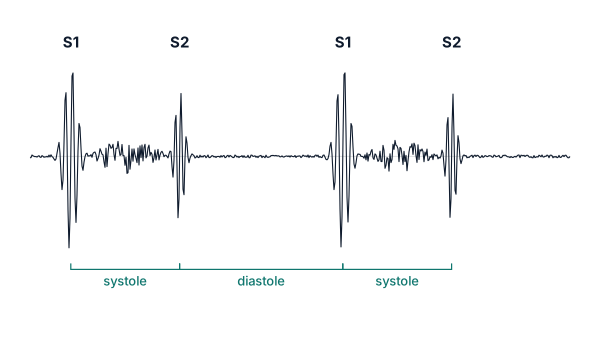
- Heart and lung sounds. Murmurs, added heart sounds and breath sounds to play, for the cardiovascular and respiratory stations.
- Tagged by sitting. Revise Part 1, Part 2 Written or PACES on its own, or internal medicine by specialty.
- An explanation after every answer. Why the diagnosis fits, why your choice does not when it is wrong, and the NICE guidance where there is one.
- Real, published sources. Expert-labelled research databases, peer-reviewed case reports and, for some sounds, a simulation manikin. See where the cases come from.
- Accuracy per diagnosis. Your weak areas come back more often.
For PACES, use it alongside examining patients.
Questions
What does MRCP(UK) stand for?
Membership of the Royal Colleges of Physicians of the United Kingdom. It is the postgraduate diploma for physicians, set by the Federation of the Royal Colleges of Physicians of the UK on behalf of the Royal College of Physicians of London, the Royal College of Physicians of Edinburgh and the Royal College of Physicians and Surgeons of Glasgow.
When can I sit MRCP Part 1?
The Federation describes Part 1 as the entry-level exam, open to doctors with at least 12 months' postgraduate experience in medical employment. In the UK most doctors sit it during the Foundation Programme or the first year of Internal Medicine Training.
Do I have to pass Part 2 Written before PACES?
No. Both need a pass in Part 1. The MRCP(UK) regulations allow Part 2 Written and PACES in either order, or at the same time. Many candidates take the written exam first.
How many attempts do I get?
The Federation allows a maximum of six attempts at any part of the MRCP(UK) examination.
Does MRCP Part 2 include images?
Yes. The Federation says Part 2 Written questions may be illustrated with clinical photographs, pathology slides, inheritance trees, ECGs, X-rays, CT and MR scans, and echocardiograms.
How long is PACES?
PACES lasts 125 minutes: five stations of 20 minutes each, with 5 minutes between them. There are eight patient encounters and two examiners at every station.
Do I need the full MRCP(UK) Diploma for specialty training?
For most physician specialties, yes. JRCPTB says trainees must complete Internal Medicine Training and hold the full MRCP(UK) Diploma to enter specialty training at ST4.
How does JustDiagnose fit with a question bank?
We provide real ECGs, scans, murmurs, breath sounds and clinical signs to interpret. This complements a question bank, courses and bedside teaching.